Sides Sauerkraut

Sauerkraut

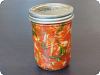
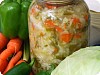
Transform cabbage into a fantastic condiment with 2 simple ingredients - cabbage and salt. All you need is a knife and some mason jars and you're ready to tackle preserving. Sauerkraut adds great texture and flavor to soups and is the perfect topping for a Reuben Pizza.

Watch this video! Get Adobe Flash Player

Tags:

  • vegetables
  • alex
  • cabbage
  • sauerkraut
  • condiment
  • cambridge school of culinary arts
  • canning
  • about alex lewin
  • chef alex lewin
  • chef lewin
  • csda
  • lactoferment
  • lacto ferment
  • fermented vegetables
  • how to can sauerkraut
  • canning sauerkraut
  • fermenting process
  • how to make sauerkraut
  • preserving
  • preserved
  • canned
  • lactofermening
  • fermenting
  • condiments
  • cabbage condiment
About Alex Lewin

Watch this video! Get Adobe Flash Player

Tags:

  • vegetables
  • cabbage
  • sauerkraut
  • cambridge school of culinary arts
  • alex lewin
  • about alex lewin
  • chef alex lewin
  • chef lewin
  • csda
  • lactoferment
  • lacto ferment
  • fermented vegetables
  • how to can sauerkraut
  • canning sauerkraut
  • fermenting process
  • how to make sauerkraut

About Sauerkraut

Transform cabbage into a fantastic condiment with 2 simple ingredients - cabbage and salt. All you need is a knife and some mason jars and you're ready to tackle preserving. Sauerkraut adds great texture and flavor to soups and is the perfect topping for a Reuben Pizza.

About Alex Lewin

Alex found his way into the culinary field by way of math and finance. A lifelong love of food and Anthony Bourdain's book, Kitchen Confidential, pointed him in the right direction. He attended the Cambridge School of Culinary Arts but still stayed to finance. After doing work related to funding sustainable technology businesses and reading Wild Fermentation by Sandor Ellix Katz, he was hooked. For more about Alex and his talents and interests, follow his incredible blog, feedmelikeyoumeanit.com.


Recipe

Ingredients

  • ¼ of a cabbage (400 gm) or more of cabbage (green, red, or a mixture)
  • 8 gm (1½ tsp) sea salt

Special Equipment

How-to

  1. Quarter the cabbages. Discard the cores or keep them and use them, as you like
  2. Weigh the cabbage
  3. Measure salt equal to roughly 2% of the weight of the cabbage. (Metric measures make this easier.) Alternatively, as in this video, measure 1½ tsp of salt per 400 gm (¼ cabbage). Too much salt will slow down the fermentation, and result in an overly-salty product; too little salt will increase the likelihood of mushiness or even putrefaction
  4. Slice or shred the cabbage using a large chef ’s knife, a shredding attachment on a food processor, or whatever tool you like
  5. Place the cut cabbage in a large mixing bowl, adding salt as you go. When everything is in the bowl, mix and squeeze the mixture with (clean!) hands for a minute or two, until the cabbage has started to release liquid
  6. Pack the mixture as tightly as you can into 1-pint mason jars, leaving at least an inch of space at the top of each jar. Close the jars, and store them at room temperature, away from sunlight
  7. Once a day, open the jars and pack down their contents so that the liquid rises. If the liquid does not cover the cabbage completely after two days, add brine to cover. (The brine should be 2% salt by weight. Use filtered water; the chlorine in municipal tap water kills bacteria—that’s why it’s there!)
  8. Make sure to keep the cabbage covered with liquid thenceforth, otherwise your sauerkraut may discolor, dry out, or even become moldy.  If you don’t leave enough space at the top of the jars, some of the liquid may leak out as the fermentation progresses. This is an inconvenience, but not a cause for alarm
  9. Taste the sauerkraut after a few days four days, and periodically thereafter. Depending upon ambient temperature, your taste, and other factors, the sauerkraut may be “ready” after 4 days, or after 4 months, or some time in between. When you decide it is “ready”, or slightly before, put it in a refrigerator or a cool cellar, or bury it in the ground. The cooler the environment, the slower the subsequent fermentation

Variations
• Sea salt contains healthy trace minerals. Prefer sea salt over kosher salt. In any case, do not use iodized table salt, and do not use salt containing “anti-caking agents”. (Check the list of ingredients.)
• Use a mixture of green cabbage and red cabbage to make pink sauerkraut
• Herbs and spices may be added when making the sauerkraut. For instance, you can add a teaspoon or more of caraway seeds per pound of cabbage. (Or fennel seeds, or anise seeds. Toast them first if you like.) On the other hand, making unseasoned sauerkraut gives you
added flexibility; you can always season your sauerkraut `a la minute.
• Precise kitchen scales can be bought inexpensively over the Internet. A digital scale with 1-gram resolution is very useful for cooking and baking. 0.1-gram resolution can be useful, too, when working with spices for instance
• On sandwiches, food-processor-shredded sauerkraut works well. On its own, hand-cut sauerkraut is crunchier and perhaps more interesting


More from this hero

Share this video

Send to a Friend

Want to share this how2heroes video with a friend? Enter your email address and their email address below and hit share. They’ll receive an email from you with the details.


Get code

If you’d like to publish this how2heroes video on your own Web page or blog, copy the code below and paste it into the HTML on your site. Please note that some blogs may require additional steps to publish HTML.

Comments (0)

Log in to comment & post a picture

No comments have been posted yet.